
Get Plus®
Beneficial Endophytes for Healthier, More Productive Forage
Traditionally, forage grasses have been judged by two characteristics: yield and persistence. At Barenbrug, we believe a third characteristic is just as important: forage quality. After all, forage quality has a direct impact on animal performance and your operation's profitability.
That's why we developed Get Plus®, a technology that combines elite forage genetics with carefully selected beneficial, non-toxic endophytes. These naturally occurring fungal partners help improve plant persistence while maintaining excellent forage quality and animal performance.
What's an Endophyte?
An endophyte is a naturally occurring fungus that lives inside certain cool-season grasses.
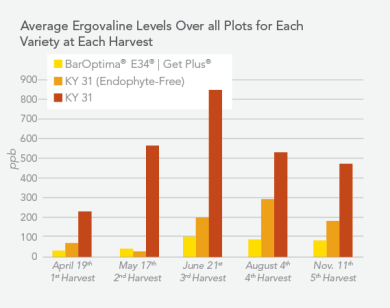
Kentucky 31 tall fescue became widely adopted because its naturally occurring endophyte helped the grass tolerate drought, insects, and other environmental stresses. Unfortunately, that same endophyte produces alkaloids that can negatively affect grazing animals, contributing to fescue toxicosis.
Symptoms may include:
- Elevated body temperature
- Reduced weight gain
- Decreased milk production
- Reduced fertility
- Lameness
- Lower overall animal performance
While the endophyte benefits the plant, it can reduce livestock productivity and profitability.
What Is a Beneficial Endophyte?
Barenbrug researchers evaluated endophytes collected from around the world, searching for strains that provided the persistence benefits producers wanted without producing harmful alkaloids.
After extensive research, two beneficial, non-toxic endophytes were selected:
- E34®
- NEA2®
These endophytes were incorporated into elite forage genetics to create the Get Plus® family of products. The result is forage that maintains the persistence advantages of traditional endophyte-containing grasses while supporting excellent animal performance and forage quality.
Proven Performance
Years of university research and on-farm evaluation continue to demonstrate the value of Get Plus® technology. Research has shown:
- 59% greater total live weight gain per acre compared to Kentucky 31 over two years in University of Arkansas trials.
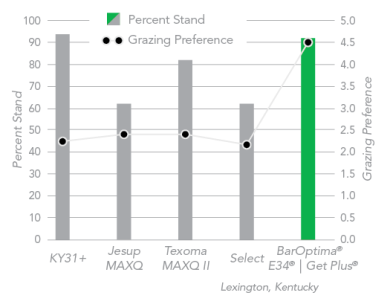
- Excellent long-term persistence, with BarOptima® E34® | Get Plus® maintaining strong stands after four years of continuous grazing.
- Greater grazing preference, with cattle consistently selecting BarOptima® E34® | Get Plus® over Kentucky 31 and several competing varieties.
- Improved animal performance while maintaining the persistence producers expect from endophyte-enhanced forage.
The initial thing I noticed was that the first time I turned cattle in on BarOptima® E34® | Get Plus®, the cows ate right down the rows, there was no doubt they were selecting it, even over the wheat!
- Josh Spain, MO
How Beneficial Endophytes Work
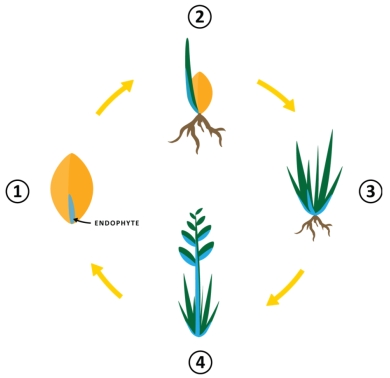
Beneficial endophytes live entirely within the plant and are passed only through seed.
Their life cycle follows four stages:
- The endophyte begins as a fungus living within the seed.
- As the seed germinates, the endophyte grows into the emerging shoot.
- The endophyte remains concentrated near the base of the plant throughout its life.
- During seed production, the endophyte moves into developing seed, allowing the next generation to inherit the beneficial relationship.
Because endophytes are transmitted only through seed, they do not spread from plant to plant within an established pasture.
Why Producers Choose Get Plus®
- Beneficial Endophytes: Carefully selected non-toxic endophytes improve persistence without compromising livestock performance.
- Improved Animal Performance: Helps avoid the negative effects associated with toxic endophytes found in older tall fescue varieties.
- Excellent Persistence: Supports long-lasting forage stands capable of withstanding grazing and environmental stress.
- Higher Grazing Preference: Research has shown cattle consistently prefer Get Plus® forage over Kentucky 31 and several competing varieties.
- Proven Profitability: Greater animal performance and stand persistence help maximize long-term return on investment.
Experience Get Plus® Technology
Get Plus® technology is available across Barenbrug's premium forage products, delivering beneficial endophytes in both tall fescue and perennial ryegrass.
- BarOptima® E34® | Get Plus® - Soft-leaf tall fescue featuring the beneficial E34® endophyte for outstanding persistence, palatability, and animal performance.
- Remington NEA2 | Get Plus® - Persistent perennial ryegrass featuring the beneficial NEA2® endophyte for improved summer persistence and excellent forage quality.
Better forage isn't just about producing more dry matter. It's about producing forage that supports healthier livestock, stronger pasture persistence, and greater long-term profitability.
Explore Barenbrug products featuring Get Plus® technology and discover how beneficial endophytes can help improve both forage performance and animal productivity.
Ready to Plant? Check the Get Plus® Collection:

BarOptima® E34® | Get Plus®
-
Beneficial Endophyte
-
Rapid Establishment
-
Highly Palatable
Remington NEA2 | Get Plus®
-
Beneficial NEA2 Endophyte
-
Improved Summer Persistence
-
Rapid Establishment