The Homeowner's Guide to Creeping Bentgrass
Bringing Golf Course Quality to Your Lawn
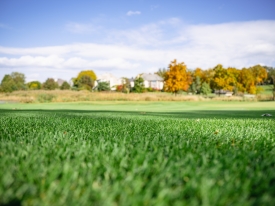
When you walk across a pristine golf course putting green, you’re experiencing one of turfgrass science’s greatest achievements: creeping bentgrasses, known for their lush, carpet-like appearance. Long reserved for professional applications, today’s improved varieties are opening new possibilities for discerning homeowners seeking exceptional turf quality.
What Is Creeping Bentgrass?
Creeping Bentgrass (Agrostis stolonifera) is a fine-textured, cool-season perennial grass known for its ability to create dense, carpet-like surfaces. Unlike many common lawn grasses, it spreads via above-ground stems called stolons, which create a tight, interwoven turf that can be maintained at extremely low mowing heights—as low as 1/8 inch.
The grass features a bright emerald-green color, fine leaf blades, and exceptional density that creates a luxurious, uniform appearance. It thrives in cool, moist conditions and can maintain excellent quality in partial shade, making it versatile for various landscape settings.
A Brief History of Bentgrass
Bentgrasses are native to Europe and were among the first turfgrasses brought to North America by European settlers in the 17th century. They naturally populated coastal areas and wetlands before being recognized for their turfgrass potential.
The modern era of Bentgrass began in the early 20th century when the USDA and the United States Golf Association (USGA) collaborated to collect and evaluate Bentgrass varieties. The introduction of the first cultivated varieties in the 1920s revolutionized golf course management, allowing for smoother, faster putting surfaces.
Through the decades, turfgrass breeders have continuously improved Creeping Bentgrass, developing varieties with enhanced disease resistance, heat tolerance, and turf quality, expanding its potential uses beyond golf courses.
Creeping Bentgrass vs. Other Bentgrass Species
The Bentgrass family includes several species that differ in their growth habits and optimal uses:
Creeping Bentgrass excels in creating the densest, most uniform turf surface. Its aggressive stoloniferous growth produces a tight, woven mat that stands up to very low mowing heights. This makes it ideal for putting greens and high-end lawn applications where exceptional smoothness is desired.
Colonial Bentgrass (Agrostis capillaris) forms a less dense turf with a more upright growth habit. It spreads primarily by short underground rhizomes and tillers rather than stolons. While it can’t match Creeping Bentgrass’s density, it offers better drought tolerance and adapts well to less intensive management, making it suitable for fairways and home lawns in cool, humid regions.
Velvet Bentgrass (Agrostis canina) features the finest leaf texture of all Bentgrasses, creating an extremely fine, velvety appearance. It has excellent shade tolerance and can create beautiful turf surfaces, but it’s highly susceptible to disease and requires intensive management. Though prized for its exceptional aesthetic quality, its maintenance requirements limit its practical use for most homeowners.
Modern Creeping Bentgrass Varieties for Homeowners
Today’s advanced Creeping Bentgrass cultivars offer significant improvements over older varieties, making them more practical for homeowner use:
L-93 XD represents the next generation of the legendary L-93 variety, offering enhanced disease resistance particularly against dollar spot, brown patch, and anthracnose. Its excellent density and upright growth habit contribute to superior putting quality while reducing the thatch buildup that plagued earlier varieties. For homeowners, this means less chemical intervention and easier management.
T-1 delivers exceptional heat tolerance and maintains quality during summer stress periods when other cool-season grasses struggle. Its aggressive establishment rate helps it compete effectively against Poa annua (annual bluegrass) invasion, a common problem in high-quality turf. T1’s visual quality and uniform growth make it an excellent choice for homeowners in transition zones.
V8 combines genetics from multiple elite bentgrass lines to create a variety with outstanding versatility. It performs well across different mowing heights and climate conditions, making it forgiving for homeowners new to managing bentgrass. Its vibrant color retention throughout the season provides consistent aesthetics with less input.
Creeping Bentgrass for Home Landscapes
While traditionally reserved for golf courses, Creeping Bentgrass can create stunning home lawns when properly managed:
Ideal Applications:
- Showcase front lawns where a fine-textured, carpet-like appearance is desired
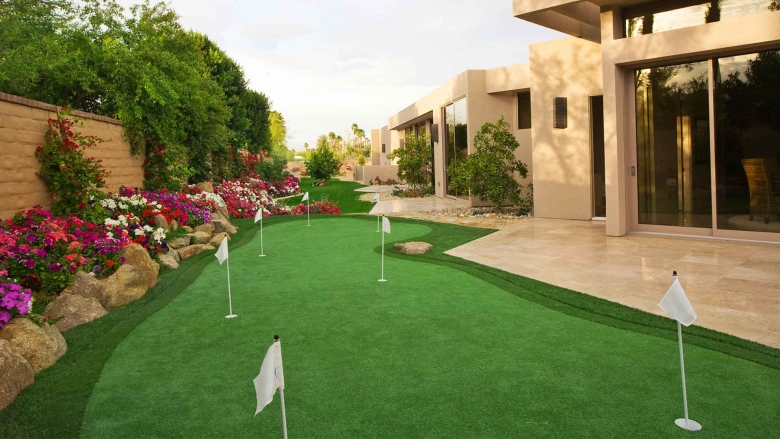
- Backyard putting greens for golf enthusiasts
- Small, high-visibility areas where exceptional turf quality justifies intensive management
- Cool, humid regions where Bentgrass naturally thrives

Management Considerations:
- Mowing: Requires frequent mowing (3-4 times weekly) at heights between 0.25-0.75 inches with a reel mower for optimal results.
- Irrigation: Needs consistent soil moisture; invest in an efficient irrigation system.
- Fertility: Thrives on light, frequent fertilization rather than heavy, infrequent applications.
- Cultivation: Regular aeration and light topdressing help manage thatch buildup.
- Pest Management: Preventative disease management is essential, particularly for fungal issues.
Is Creeping Bentgrass Right for Your Lawn?
Creeping Bentgrass offers unmatched quality for homeowners willing to invest in proper maintenance. Consider these factors before establishing a Bentgrass lawn:
- Your climate (performs best in cool, humid regions)
- Available time for maintenance
- Irrigation capabilities
- Willingness to learn specialized management techniques
- Budget for appropriate equipment and inputs
For those with the commitment to maintain it properly, Creeping Bentgrass provides a stunning, showcase lawn that stands apart from conventional turfgrasses. The latest varieties like L-93 XD, T-1, and V8 make this exclusive turfgrass more accessible than ever to discerning homeowners.
With proper selection, establishment, and care, you can bring the same exceptional turf quality found on the world’s finest golf courses right to your own landscape.